When to Refer a Patient to Hospice: A Guide for Healthcare Professionals
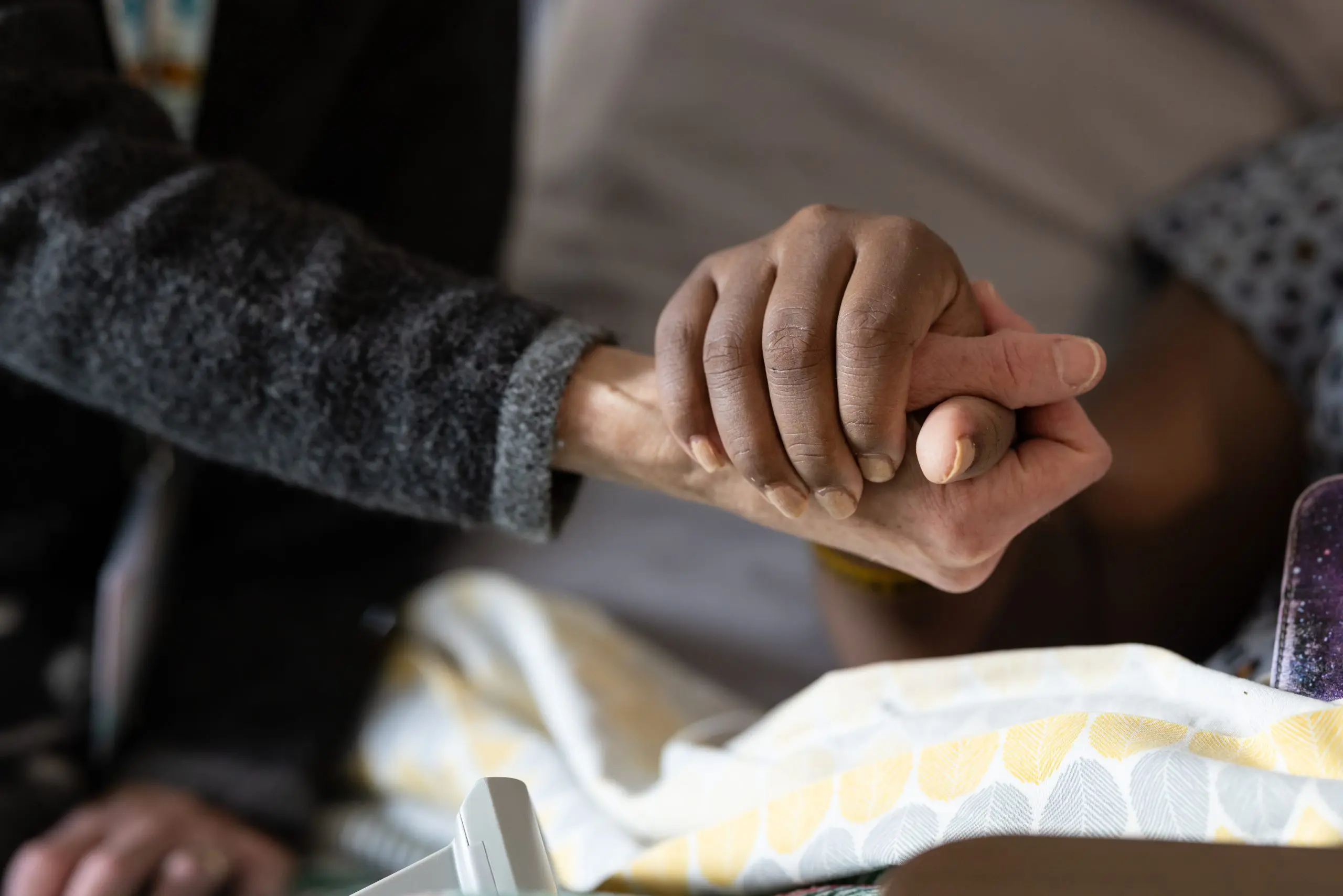
You’ve likely seen it: a patient discharged to hospice 72 hours before death. Families unprepared. Symptoms uncontrolled. A window of comfort and clarity lost. This doesn’t have to happen.
Research consistently demonstrates that earlier referral — 30 or more days before death — improves patient comfort, family satisfaction, and reduces hospital readmission. Yet the average hospice referral still happens just 3–5 days before death. For discharge planners, physicians, social workers, and nurse case managers across the Twin Cities, timing is everything. This guide helps you identify the right moment and streamline the referral process.
The Real Cost of Late Referral
Late hospice referral is not a documentation problem — it is a patient and family harm. When referrals happen in the final days of life:
- Symptoms go uncontrolled because the care team has not had time to titrate medications and develop a comfort plan.
- Families are unprepared emotionally, practically, and spiritually for what is ahead.
- Hospital readmission increase, driving cost and clinical burden without improving outcomes.
- Families carry lasting regret — studies link late enrollment to higher rates of complicated grief.
The solution is earlier, more confident referral. When you know what clinical signals to look for, referring a patient to hospice becomes a decision rooted in evidence — and one that profoundly improves patients dignity and end-of-life outcomes.
A hospice referral is a physician order or recommendation that transitions a patient from curative treatment to comfort-focused hospice care, typically when the patient has a prognosis of six months or less if the disease follows its expected course. Hospice eligibility does not require certainty — it requires a clinical judgment that the patient could have six months or less.

When to Refer a Patient to Hospice: Clinical Indicators by Diagnosis
Knowing when to refer a patient to hospice starts with recognizing the functional and disease-specific markers that signal the shift from curative to comfort-focused care. Below are hospice referral criteria by diagnosis for the conditions most commonly seen in the Twin Cities.
Heart Failure
- NYHA Class IV symptoms despite optimal medical management
- Recurrent hospitalizations (two or more in the past six months) for exacerbation
- Ejection fraction of 20% or less (when measured)
- Persistent symptoms at rest, including dyspnea, fatigue, and fluid overload
- Patient has declined or is not a candidate for transplant or mechanical circulatory support
Chronic Obstructive Pulmonary Disease (COPD)
- FEV1 less than 30% predicted after bronchodilator use
- Oxygen dependence at rest on supplemental O2
- Recurrent emergency department visits or hospitalizations for respiratory infections or exacerbation
- Cor pulmonary or right heart failure secondary to pulmonary disease
- Unintentional weight loss greater than 10% over six months
- Resting tachycardia > 100/min
Dementia and Alzheimer’s Disease
- FAST Scale 7C or beyond (inability to ambulate, dress, or bathe independently; limited speech to fewer than six intelligible words)
- Recurrent aspiration pneumonia or urinary tract infections
- Decline in nutritional status despite assisted feeding
- Stage 3 or 4 pressure ulcers that are not healing
- Progressive functional decline documented over six months
Cancer
- Metastatic disease with continued decline despite treatment or patient has declined further curative therapy
- ECOG Performance Status of 3 or 4
- Significant weight loss, progressive weakness, and increasing symptom burden
- Recurrent hospitalizations for symptom management
A 2020 JAMA Internal Medicine study found that hospice enrollment at least 30 days before death was associated with a 30% reduction in hospital readmission and significantly lower family-reported distress.
— JAMA Internal Medicine, 2020
Note for clinicians: The diagnosis-specific terms above (NYHA Class IV, FEV1, FAST Scale, ECOG Performance Status, cor pulmonary) are intentionally clinical. This content is written for physicians, discharge planners, social workers, and case managers. If you are sharing this resource with a patient or family member, call us at 651-789-5031 and we will walk you through what these markers mean in plain language.
These criteria are not rigid cutoffs. They are clinical signals. When two or more indicators are present, it is time to initiate a conversation about hospice and living well — with the patient, the family, and a hospice provider.
Hospice Eligibility Criteria: The Medicare Guidelines Clinicians Should Know
Understanding hospice eligibility requirements for physicians and referring clinicians is essential to a smooth referral process. Medicare hospice benefits, which cover the vast majority of hospice admissions in Minnesota, require two conditions to be met.
The Two Medicare Requirements
- Physician certification of terminal prognosis. Two physicians (the patient’s attending physician and the hospice medical director) must certify that the patient has a life expectancy of six months or less if the disease follows its normal course.
- Patient election of comfort-focused care. The patient (or their healthcare proxy) must sign a hospice election benefit, choosing comfort care over curative treatment for the terminal diagnosis.
What Medicare Hospice Covers
Medicare’s hospice benefit is comprehensive. It includes physician services, nursing visits, medications related to the terminal diagnosis, medical equipment, aide services, physical and occupational therapy, speech therapy, social work, spiritual counseling, and bereavement support for the family.
Importantly, patients can revoke their hospice election at any time if they choose to resume curative treatment. This is a critical point to share with patients and families who worry that choosing hospice means closing a door permanently to curative therapies in the future, should they become appropriate.
Common Documentation Gaps
The most frequent cause of referral delays is incomplete documentation. To avoid delays, ensure the referral includes:
- A current face-to-face evaluation or recent progress notes, most recent history & physical
- Diagnosis with supporting clinical evidence of decline
- Medication list and current treatment plan
- Advance directive or POLST form (if available)
- Insurance information and demographic data
- Order for hospice services
Our Lady of Peace’s referral coordination team walks clinicians through documentation requirements for every referral. If you are uncertain whether a patient qualifies, call us — we would rather help you evaluate eligibility than see a patient miss the window for earlier, better care.
Common Barriers to Timely Hospice Referral — and How to Overcome Them
Late hospice referrals are rarely caused by a lack of clinical knowledge. More often, they stem from emotional, systemic, and communication barriers. Recognizing these barriers is the first step to overcoming them.
Barrier 1: Prognostic Uncertainty
Clinicians are trained to fight disease. Prognostication feels like guessing, and many physicians worry about being “wrong.” But hospice eligibility does not require certainty — it requires a clinical judgment that the patient could have six months or less. If you would not be surprised if the patient died within six months, a referral conversation is appropriate.
Barrier 2: Equating Hospice With Giving Up
This belief persists among both clinicians and families. In practice, hospice is an active and intensive form of care. Instead of “stepping back,” think “stepping in.” Hospice adds comfort, skilled nursing, medication management, and family support when cure is no longer the goal. Patients receive in-home hospice services that manage pain, reduce symptom burden, and provide emotional support to the patient and their entire family.
Barrier 3: Difficult Conversations With Families
Discharge planners and social workers often bear the weight of hospice conversations. It helps to separate the clinical recommendation from the family discussion. When a physician initiates the recommendation, families are more likely to accept it. According to the National Hospice and Palliative Care Organization (NHPCO), family acceptance of hospice increases significantly when the recommendation comes directly from the treating physician.
Barrier 4: System-Level Delays
Hospital discharge workflows, insurance verification, and bed availability can all slow the referral process. This is where having a responsive hospice partner matters. Our Lady of Peace’s goal is to respond to all referrals within the same business day and works to facilitate quick admissions.
Residential Hospice: When Home-Based Care Isn’t Enough
Most hospice care in the Twin Cities is delivered in the home. But not every patient can be safely or comfortably managed at home. Some patients live alone. Some have symptoms too complex for family caregivers to manage. Some need a level of clinical oversight that exceeds what periodic home visits can provide.
This is where residential hospice changes the equation.
What Makes Residential Hospice Different
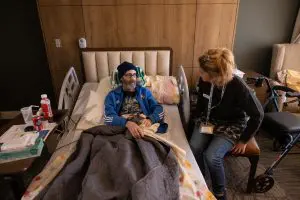
Our Lady of Peace operates a 21-private room residential hospice facility in St. Paul — one of the only facilities of its kind in Minnesota. Unlike a nursing home or hospital unit, the residence is designed to feel like home while providing around-the-clock clinical care.
Residential hospice is appropriate for patients who meet one or more of these criteria:
- Uncontrolled symptoms that require continuous nursing assessment and medication management
- Caregiver needs — the patient requires more care than can be safely managed at home
- Complex medical needs such as wound care, complex medication management, or frequent repositioning
- Acute symptom crisis requiring general inpatient-level care in a comfort-focused environment
- Patient or family preference for care supported by an interdisciplinary team during the final stages of life
How Residential Hospice Supports the Referral Process
For discharge planners, the residential option solves a common problem: the patient who is ready for hospice but cannot go home. Instead of keeping that patient in an acute care bed or placing them in a skilled nursing facility not designed for end-of-life care, you can refer directly to Our Lady of Peace’s Residential Hospice.
The result is a better clinical match, a smoother discharge, and a patient who receives care in a setting designed specifically for comfort and dignity.
How to Make a Referral to Our Lady of Peace
The hospice referral process for discharge planners and clinicians is straightforward. Our Lady of Peace accepts referrals from physicians, nurse practitioners, social workers, discharge planners, and case managers.
From Referral to Bedside: What to Expect
- Referral coordinator acknowledges receipt and contacts you for any additional information
- Registered nurse completes initial assessment at the patient’s bedside or in their home
- Residential admission facilitated for urgent or crisis situations
- Home hospice setup completed for planned transitions
Three Ways to Refer
- Online referral form. Start a referral in 2 minutes through our digital referral page — available 24 hours a day.
- Phone. Call our referral coordination team at 651-789-5031 to discuss a complex case immediately or initiate a same-day admission.
Our Lady of Peace has served the Twin Cities since 1941, and our care team understands the urgency and complexity of hospital-to-hospice transitions. Whether the patient needs in-home hospice or residential care, we work with you to ensure a seamless hand off.
Frequently Asked Questions for Referring Clinicians
Can a non-physician (physician assistant or nurse practitioner) initiate a hospice referral?
Yes. While Medicare requires a physician certification of terminal prognosis, any member of the care team — including physician assistant, nurse practitioners, discharge planners, and case managers — can initiate the referral process. Our Lady of Peace coordinates directly with the attending physician to obtain the required certification after the referral is received.
What documentation is needed for a hospice referral?
At minimum, we need the patient’s name, date of birth, diagnosis, insurance information, the name of the attending physician and order for hospice services. A current medication list, recent progress notes, and advance directives are helpful but not required to begin the process. Our referral coordinators work with your team to gather any missing documentation.
What happens if the patient’s condition improves after hospice enrollment?
Hospice is not irreversible. If a patient’s condition stabilizes or improves, they can be discharged from hospice and resume curative treatment at any time. Patients can also re-enroll in hospice later if their condition declines again. This flexibility is important to communicate to patients and families who may hesitate because they fear the decision is permanent.
Ready to refer your next patient? Start a referral in 2 minutes or call 651-789-5031 to discuss a complex case immediately.