How to Start Hospice Care: A Step-by-Step Guide for Families

When Cynthia’s health began to decline, she and her husband, Dan, were already receiving care from the Home Health team at Our Lady of Peace. As her condition progressed and curative treatments were no longer providing the desired results, her healthcare team recommended hospice care to focus on comfort, quality of life, and support for both Cynthia and her family.
For Dan, the transition felt natural because it allowed them to remain with a team they already knew and trusted.
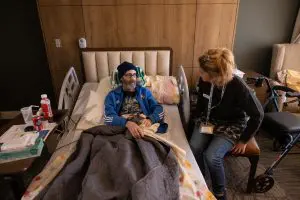
“One of the things I appreciated most was that we didn’t have to start over with a new care team. We were able to stay with Our Lady of Peace from Home Health to hospice, and that made such a difference. The people caring for Cynthia felt like trusted friends. They were there for us at home and later in the Residence, always making sure she was comfortable and helping our family through each stage. It gave us a lot of peace knowing she was in such good hands.” Dan shares.
A hospice referral can come from any physician, and most hospice providers can begin an initial assessment within 24–48 hours of receiving a referral. Most referrals move within 24–48 hours; in urgent situations, some providers arrange same-day starts. Initial assessment to first nurse visit typically takes less than 2 days. Starting hospice care involves five key steps — and most families are surprised by how quickly comfort and support begin.
If you or someone you love is living with a serious illness, this guide walks you through the hospice enrollment process step by step so you know exactly what to expect.
How to Start Hospice Care: 5 Steps from Decision to First Visit
Many families assume how to start hospice care is a complicated medical process. In reality, it begins with a conversation and can move quickly once you are ready.
Here are the five steps most families follow:
- Talk to your doctor about a hospice referral
- Choose a hospice provider you trust
- Complete a hospice eligibility assessment
- Begin receiving care — often within days
- Settle into a rhythm with your dedicated care team
Each step is designed to center your family’s comfort, goals, and dignity. Let’s walk through them together.
Step 1: Talk to Your Doctor About a Hospice Referral
Starting hospice care typically begins by having conversations with your health care team about your serious illness and your personal goals and expectations for treatment. This process is often called Advanced Care Planning.
During advanced care planning, you may be asked to fill out a Health Care Directive. This is a document where you choose a loved one to make health care decisions on your behalf if you are ever unable to do so. A Health Care Directive is not required to begin hospice, but it is a helpful step in clarifying your wishes.
According to the National Hospice and Palliative Care Organization (NHPCO), over 1.7 million Medicare beneficiaries received hospice services in the most recent reporting year. Yet many families delay enrollment because they don’t know how simple the process is.
— NHPCO
Who can make a hospice referral?
Any physician can write a hospice referral — your primary care doctor, a specialist, or a hospital physician. Families can also contact a hospice provider directly to request an evaluation. You do not need to wait for your doctor to bring it up.
If your loved one is being discharged from a hospital, the discharge planner or social worker can help initiate a referral. Our Lady of Peace makes it easy for healthcare professionals to refer a patient through our referrals page.
What to say to your doctor
You might say something like: “We’d like to understand whether hospice is appropriate at this point. Can you help us explore a referral?” Most physicians welcome the conversation and can provide guidance on timing.
Step 2: Choose a Hospice Provider You Trust
Once you have a referral — or even before — you have the right to choose your hospice provider. This is an important decision, and it’s worth interviewing more than one agency.
Questions to ask when interviewing hospice providers
- Caseloads: What is the average number of patients each nurse or aide cares for? Lower caseloads often mean more attentive, personalized care.
- Visit frequency: How often will the care team visit? What does a typical week look like?
- After-hours support: What is the process for after-hours visits or urgent needs? Is a nurse available by phone around the clock?
- Concerns and complaints: If I have a concern or complaint, who do I contact? What is the process for addressing it?
- Team preferences: Can I request a different team member if the fit isn’t right?
- Changing providers: Can I switch to a different hospice agency if I’m not satisfied? (Yes — Medicare guarantees this right.)
In-home or residential hospice?
Most hospice care is delivered wherever you call home. In-home hospice brings a full care team — nurse, social worker, chaplain, and aide — directly to your home, wherever that may be.
For families who need around-the-clock nursing support, a residential hospice facility offers 24-hour care in a home-like setting. Our Lady of Peace operates a 21-private room hospice residence in St. Paul — one of the few residential hospice homes in the Twin Cities. This option provides continuous comfort care when symptoms cannot be managed at home.
Step 3: What Happens During the Hospice Eligibility Assessment
After you choose a provider, a registered nurse or clinical team member will visit to complete an eligibility assessment. This visit typically happens within 24 to 48 hours of the referral.
What the assessment involves
The nurse will review the patient’s medical history, current symptoms, medications, and overall condition. They will talk with the patient and family about goals for care — what matters most, what brings comfort, and what kind of support is needed.
Medicare hospice eligibility
To qualify for hospice under Medicare, a physician must certify that the patient has a life-limiting illness — meaning a serious, progressive condition — with a prognosis of six months or less if the illness follows its expected course. This does not mean the patient has only six months to live. Many patients receive hospice care for longer, and eligibility is reassessed periodically.
Medicare covers hospice care at 100 percent, including medications related to the terminal diagnosis, medical equipment, and all visits from the care team.
What if the patient improves?
If a patient’s condition improves, they can be discharged from hospice and return later if needed. Choosing hospice is never a one-way door.
Step 4: Your First Day of Hospice — What to Expect
The first day of hospice care is focused entirely on comfort and getting to know your family.
What happens on day one
A nurse will visit to set up any needed medical equipment — such as a hospital bed, oxygen, or medication — and review the care plan with your family. They will answer every question you have, no matter how small.
Your care team will introduce themselves over the first several days. This team typically includes a registered nurse, a certified nursing assistant, a social worker, a chaplain, and a volunteer. Each person plays a role in supporting both the patient and the family.
Emotional support starts immediately
Hospice is not just medical care. From the very first visit, your team is there to listen, to guide difficult conversations, and to help your family feel less alone. Our Lady of Peace also offers ongoing grief and bereavement support — open to all community members, not just hospice families.
Most families tell us the same thing: “I wish we had started sooner.” The days and weeks of hospice often become some of the most meaningful time families share together.
You are not alone in this
Starting hospice care can feel like a big step. But you do not have to figure it out by yourself. Your care team walks beside you through every stage of the journey — answering questions, adjusting the plan, and making sure your loved one is comfortable.
Frequently Asked Questions About Starting Hospice
Can a family request hospice without the doctor bringing it up?
Yes. Families can contact a hospice provider directly to request an evaluation. You do not need to wait for your physician to suggest hospice. Most providers, including Our Lady of Peace, welcome calls from families and can help coordinate the referral with your doctor.
How quickly can hospice start after a referral?
In most cases, hospice care can begin within 24 to 48 hours after a referral is received. In urgent situations, some providers offer same-day admissions. The hospice enrollment process step by step is designed to move quickly so comfort is not delayed.
What if the patient doesn’t have a primary care doctor?
A hospice provider can help connect the patient with a physician who will oversee their hospice care. The hospice medical director can also serve as the attending physician if needed. Not having a primary care doctor does not prevent someone from receiving hospice.
Does the patient need to leave the hospital to start hospice?
No. Hospice can be arranged before a hospital discharge, and care begins as soon as the patient arrives home or at a residential facility. Hospital social workers and discharge planners often coordinate directly with hospice providers to ensure a smooth transition. If you’re a healthcare professional looking to refer a patient, visit our referrals page to learn how to get hospice care started quickly.
Ready to Take the Next Step?
Ready to learn more? Call our care team at 651-789-5031 — we can walk you through every step. We are here when you need us most.
If you’re a healthcare professional looking to refer a patient, visit our referral page to connect with our admissions team.