5 Ways to Support a Family Going Through Hospice
When your friend tells you their loved one is in hospice, the first thing you say is, “Let me know if you need anything.” But hospice families rarely ask. Here are five things you can do without being asked.
Knowing what to say when visiting someone in hospice is one of the most common worries people share with us. The good news? The most helpful support is rarely about saying the perfect thing. According to hospice social workers, the most helpful support for families during hospice is practical — meals, errands, and simply sitting with the patient so the caregiver can rest.

Hospice care is comfort-focused care for people nearing the end of life, wherever they call home — including at Our Lady of Peace’s residential hospice. Families walking this journey are carrying a lot. The people around them can lighten that load in small, meaningful ways. Below are five concrete ideas you can act on this week.
What to Say (and What Not to Say) When Visiting Someone in Hospice
Many people avoid visiting because they’re afraid of saying the wrong thing. But your presence matters more than your words.
Lead with warmth, not fixing
You don’t need to have answers. Simple, honest phrases work best: “I’m so glad I’m here with you,” or “I’ve been thinking about you.” Let the person guide the conversation. If they want to talk about ordinary things — the garden, an old memory, a favorite show — follow their lead.
Gently steer clear of these
Avoid phrases that minimize what’s happening, like “Everything happens for a reason” or “They’re in a better place.” Skip detailed medical advice or stories about others who were sick. And don’t feel pressured to fill every silence. Sitting quietly beside someone is its own kind of comfort.
For more guidance on this, our post on what to talk about when visiting someone in hospice care offers gentle conversation starters you can use.
But saying the right thing is only half the battle. Hospice families need practical action just as much as they need compassionate words.
Practical Help That Actually Makes a Difference
This is where you can help a family during hospice care the most. Vague offers put the work back on the family. Specific offers get accepted.
Offer one concrete thing, not an open door
Instead of “Let me know if you need anything,” try:
- “I’m bringing dinner Thursday — is 6 p.m. okay?”
- “I’m at the store now. What can I grab for you?”
- “I’ll take the kids to soccer this weekend.”
When you name the task and the time, you remove the burden of asking.
Think about what to bring when visiting a hospice patient
Wondering what to bring when visiting a hospice patient? Keep it simple and low-pressure: a soft blanket, hand lotion, a favorite snack for the caregiver, fresh flowers, or a playlist of music the patient loves. Small comforts often mean more than grand gestures.
How to Be Present Without Being Overwhelming
Hospice families need support — and they also need space. The art is offering both.
Follow their pace
Send a short text that doesn’t require a reply: “Thinking of you today. No need to respond.” Drop a meal on the porch instead of expecting an invitation inside. Ask before you visit, and keep visits brief unless you’re invited to stay.
Show up quietly and consistently
A steady presence over weeks matters more than one big visit. Consistency tells a family they’re not walking this journey alone. If you’re wondering how to support a friend whose loved one is in hospice, sometimes the answer is simply to keep showing up — gently, and without keeping score.

Supporting the Caregiver — They Need Care Too
The primary caregiver often runs on empty. Supporting a caregiver during hospice may be the single most valuable thing you do.
Many caregivers report feeling emotionally stressed, yet few receive specific practical help without asking.
Give the caregiver a break
Offer to sit with the patient so the caregiver can shower, nap, or step outside. Even one hour of rest restores someone stretched thin. You can also handle the invisible chores — laundry, dishes, a grocery run, or walking the dog.
Care for their spirit, not just their tasks
Check in on the caregiver as a person, not only as a helper. Ask how they are sleeping and eating. Bring them a coffee. Remind them they matter too. A caregiver who feels seen has more to give the person they love.
After the Loss: How to Show Up in the Weeks That Follow
Support shouldn’t end at the funeral. Grief often deepens in the quiet weeks after everyone else moves on.
Keep showing up on the calendar
Mark your calendar for two weeks, one month, and the first birthday or anniversary after the loss. A simple “I’m thinking of you today” text on a hard date can mean everything. Continue inviting your friend to things, even if they say no for a while.
Point them toward grief support
Professional grief support helps many families process loss. Our Lady of Peace offers community bereavement and grief support services. Sharing that resource can be a lasting gift. For additional guidance on grief and end-of-life support, the National Hospice and Palliative Care Organization (NHPCO) offers trusted resources for caregivers and families navigating this journey.
Frequently asked questions
Is it appropriate to visit someone in hospice?
Yes, in most cases a visit is welcome — but always ask the family first. Hospice patients have good days and harder days, and the caregiver can tell you the best time to come. Keep visits short unless you’re invited to stay longer, and let the patient set the pace of the conversation.
What should I bring when visiting a hospice patient?
Bring small, low-pressure comforts: a soft blanket, hand lotion, fresh flowers, a favorite snack, or familiar music. Something for the caregiver — a coffee or a home-cooked meal — is thoughtful too. The goal is comfort and connection, not an obligation for the family to entertain you.
How can I support a friend whose loved one is dying?
Offer specific, practical help instead of open-ended offers. Drop off a meal, run an errand, or sit with the patient so your friend can rest. Send brief messages that don’t require a reply, and keep showing up in the weeks after the loss. Your steady presence is the support that lasts.
What if the hospice patient doesn’t recognize me?
It can be disorienting if a patient no longer recognizes you, but your presence still matters. Introduce yourself gently by name, speak in a calm and familiar tone, and focus on comfort rather than conversation. Holding a hand or sitting quietly nearby can provide real comfort even without recognition.
One of the most meaningful ways to support hospice families is to volunteer.
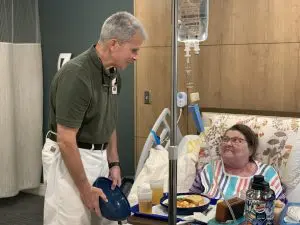
Being a patient companion means providing a gentle, steady presence at Our Lady of Peace.
Learn about volunteer opportunities at Our Lady of Peace and discover how a few hours of your time can bring comfort to a family when they need it most.