Hospice vs. Palliative Care: What’s the Difference?
Both hospice and palliative care focus on comfort, quality of life, and emotional support for patients and their loved ones. The difference comes down to timing. Palliative care can begin at any stage of a serious illness and runs alongside curative treatment. Hospice care begins when someone has a life-limiting prognosis estimated to be about six months and comfort becomes the priority.
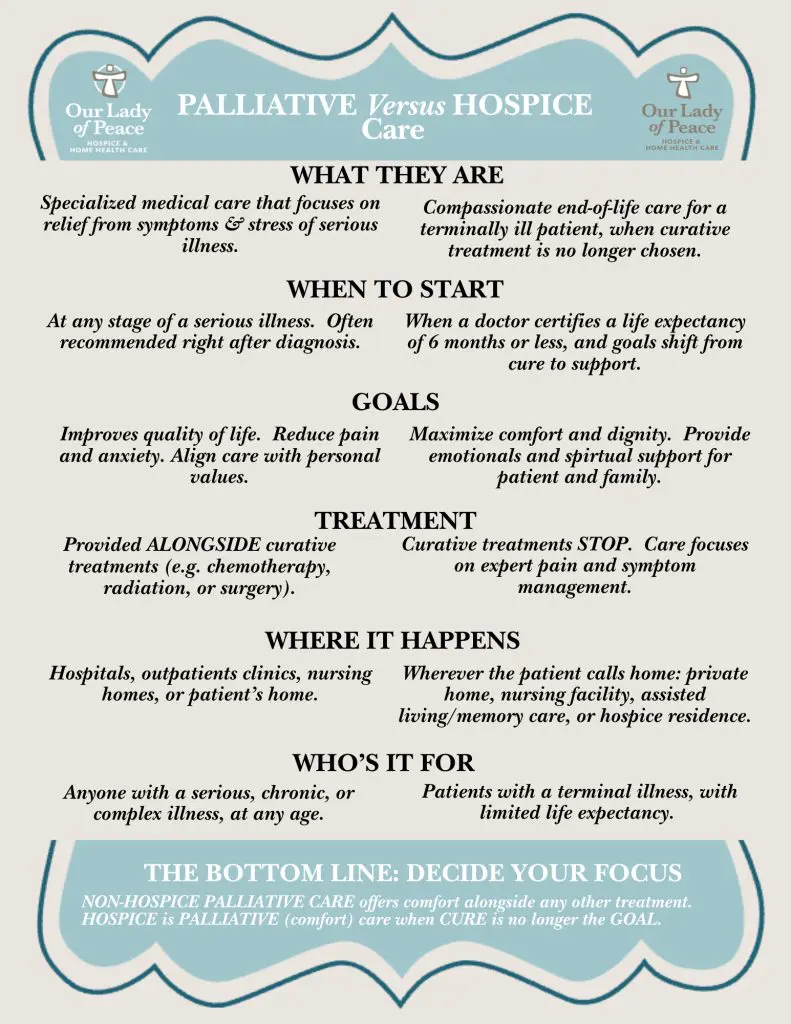
Palliative care is specialized medical care focused on relieving symptoms and stress of a serious illness at any stage. Hospice care is a form of palliative care specifically for patients with a terminal prognosis of six months or less who have chosen comfort over curative treatment. Understanding the difference between hospice and palliative care explained simply can help you and your family make a confident, informed decision about the care your loved one needs.
Here’s how to tell them apart — and which one is right for your loved one.
Find out which care model keeps your loved one most comfortable. Call 651-789-5031 today to speak with our care team — most families reach a care advisor within one business day, and our hospice admissions process typically takes just 2–3 days from initial call to first visit.
Hospice vs. Palliative Care: The Core Difference
The most important thing to know is that both hospice and palliative care share the same heart. Both prioritize comfort, dignity, and support for the whole person — body, mind, and spirit. The core difference is when each type of care begins and what it looks like day to day.
What Is Palliative Care?
Palliative care can be initiated at any stage of a serious illness. It is provided by specialists at your hospital, local clinic, or in your home — physicians, nurse practitioners, and social workers who work alongside your existing care team to provide physical, emotional, and spiritual support to adults dealing with serious illnesses.
People who receive palliative care may also continue to undergo curative treatments such as dialysis, chemotherapy, or radiation. The goal is to improve quality of life while the patient pursues every available treatment option.
What Is Hospice Care?
Hospice care begins when curative treatment is no longer effective or when a patient and their family choose to focus fully on comfort. Under hospice care, physical symptoms are aggressively managed while emotional and spiritual well-being is a priority.
Hospice can be provided in your home or in a residential hospice setting — wherever the patient and family feel most at peace. Choosing hospice is not giving up. It is choosing a different kind of care, one centered entirely on living as fully and comfortably as possible.
Key Differences at a Glance
Timing
Palliative care begins at diagnosis and continues alongside any treatment. Hospice begins when the prognosis is approximately six months or less and the focus shifts fully to comfort.
Curative Treatment
Palliative care patients may continue curative treatments such as chemotherapy, radiation, or dialysis. Hospice patients focus on comfort care and have chosen not to pursue further curative treatment.
Care Setting
Palliative care is typically provided by specialists at your hospital, clinic, or in your home. Hospice care offers more flexibility — your loved one can receive care at home, in a dedicated facility, or in a nursing home.
Care Team
Both include physicians, nurses, social workers, and chaplains. Hospice teams also include trained volunteers and bereavement counselors who support the family before and after the patient’s death.
What Research Shows: Why Families Choose Palliative Care
The evidence for palliative care is compelling — and may surprise families who associate it only with end of life.
A landmark 2010 New England Journal of Medicine study found that lung cancer patients who received early palliative care lived an average of 2.7 months longer than those who received standard oncology care alone — and reported significantly better quality of life.
— New England Journal of Medicine, 2010
This is not an isolated finding. Research consistently shows:
- Higher family satisfaction: Studies show family members of patients who received palliative care report significantly higher satisfaction with their loved one’s care compared to those who did not.
- Better symptom control: Patients receiving palliative care alongside cancer treatment report measurably lower rates of pain, nausea, and depression.
- Earlier hospice enrollment: Families who engage palliative care early are more likely to make a timely, informed transition to hospice — which research links to better end-of-life outcomes for both patients and caregivers.
Palliative care is not about stepping back from treatment. The data shows it can actually support better outcomes — and give families more confidence at every stage of the journey.
When Is Palliative Care the Right Choice?
Palliative care is the right choice when someone is living with a serious illness and wants relief from symptoms like pain, nausea, fatigue, or anxiety — without stopping treatment. It is available alongside any curative therapy.
Talk to your loved one’s physician about a referral to a palliative care team if your family member is experiencing any of these situations:
- Difficulty managing pain or other symptoms alongside treatment
- Emotional distress related to a serious diagnosis
- Confusion about treatment options and goals of care
- Need for an extra layer of support for the patient and family
Palliative care consultations are typically scheduled within 3–5 business days of a physician referral. If you are unsure whether your loved one qualifies, a single conversation with your doctor is often all it takes to get started.
Palliative care is a choice — one that gives your loved one additional support during a challenging time.
When Does Palliative Care Transition to Hospice?
Understanding when palliative care transitions to hospice care is one of the most common questions families ask. There is no single moment when the switch happens. Instead, it is a conversation guided by the patient, their family, and the medical team — often prompted by clear signals that the illness has progressed.
Watch for these signs that a conversation about hospice may be right:
- Your loved one — or their doctor — mentions they are tired of treatment side effects
- Treatment is no longer slowing the illness
- Your family begins talking about what matters most in the time remaining
- Your loved one expresses a desire to be at home rather than in a hospital
The transition typically happens when:
- Curative treatments are no longer working or the side effects outweigh the benefits.
- The physician estimates a prognosis of approximately six months or less if the illness follows its expected course.
- The patient and family choose to shift the focus from fighting the disease to maximizing comfort and quality of life.
The Decision Belongs to Your Family
Choosing hospice is always the patient’s and family’s decision. No one is required to transition, and the timing is personal. Many families describe feeling a sense of relief once they make the choice — not because they have given up hope, but because their loved one’s comfort becomes the clear priority.
At Our Lady of Peace, we walk alongside families through this transition. Whether your loved one receives care in their own home or in our 21-room residential hospice in St. Paul, our team is here when you need us most. Our admissions process typically takes just 2–3 days from your initial call to the first care visit — so you are never waiting when time matters most.
Insurance Coverage: How Medicare Pays for Hospice and Palliative Care
Cost and coverage are practical concerns for every family, and the difference between hospice and palliative care coverage matters.
Palliative Care Coverage
Palliative care services provided in a hospital, clinic, or at home are generally covered under standard Medicare Parts A and B, as well as most private insurance plans. Coverage works the same way it does for any specialist visit — copays, deductibles, and coinsurance may apply depending on the plan.
Hospice Care Coverage
Medicare provides a comprehensive hospice benefit under Part A that covers nearly all costs related to the terminal illness, including:
- Physician and nursing services
- Medications for symptom management and pain relief
- Medical equipment such as hospital beds and wheelchairs
- Short-term inpatient and respite care
- Counseling and bereavement support for the family
Most private insurance plans and Medicaid also include a hospice benefit. At Our Lady of Peace, our admissions team helps families navigate insurance questions so coverage never stands in the way of compassionate care.
Does Palliative Care Mean You Are Dying?
No. This is one of the most common misconceptions. Palliative care does not mean someone is dying. It simply means a person living with a serious illness is receiving extra support to manage symptoms and improve quality of life. Palliative care patients may live for many years and continue all curative treatments.
Hospice care, on the other hand, does involve a terminal prognosis — but even then, some patients live longer than expected. The focus of hospice is not on dying. It is on living well for as long as possible.
Frequently Asked Questions About Hospice and Palliative Care
Can you receive palliative care and curative treatment at the same time?
Yes. Palliative care is designed to work alongside curative treatment. You can receive chemotherapy, radiation, dialysis, or surgery while also receiving palliative care for symptom relief and emotional support. The two are not mutually exclusive.
Does insurance cover palliative care the same way as hospice?
Not exactly. Palliative care is billed under standard medical insurance, which means copays and deductibles apply as they would for any specialist visit. Hospice care is covered under a separate Medicare benefit that pays for nearly all services related to the terminal diagnosis, often with little or no out-of-pocket cost to the patient.
Can you switch from palliative care to hospice?
Yes. Many patients begin with palliative care and later transition to hospice when the focus shifts from curative treatment to comfort. The transition is guided by the patient, their family, and the care team. Patients can also revoke the hospice benefit and return to curative treatment if their condition or wishes change.
Where is palliative care provided — hospital, home, or both?
Palliative care can be provided in a hospital, at a local clinic, or in your home. Some health systems offer outpatient palliative care consultations, and home-based palliative care is increasingly available for patients who prefer to remain at home. Hospice care offers more flexibility in setting — it can be provided in the patient’s home, in a residential hospice facility like Our Lady of Peace in St. Paul, or in a nursing home.
Not sure which type of care is right for your family? Schedule a free 15-minute care consultation: Call 651-789-5031 — our care team is ready to listen, answer your questions, and help you take the next step when you are ready.